Keep source documents connected
Use invoices, receipts, supplier bills, expenses and payment records so supporting business transactions are easier to follow.

Good financial reporting begins with clear source records. LEXA helps organise invoicing, expenses, payments, accounts and transaction reports alongside the sales and purchasing activities that created them.
Public demo uses fictional business records. Real account activation is separate.
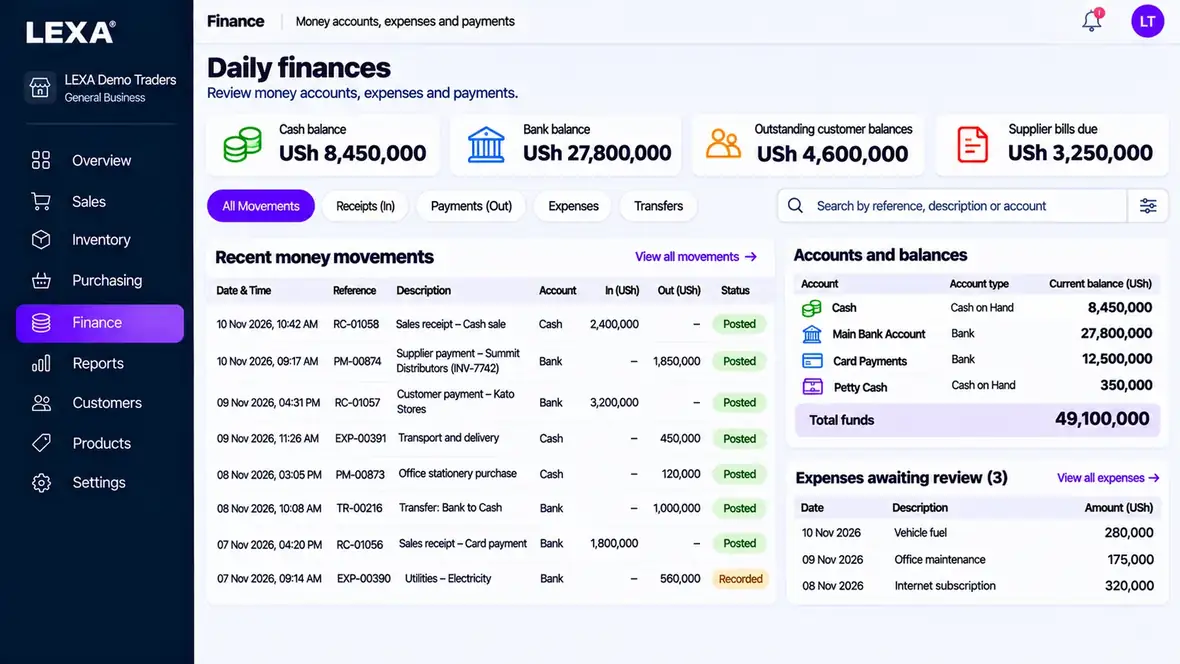
For owners and authorised finance teams who need to trace business activity from the original transaction to the recorded figure.
Use invoices, receipts, supplier bills, expenses and payment records so supporting business transactions are easier to follow.
LEXA includes journals, chart of accounts, reconciliation, budgets and other finance modules. Check how your organisation configures these workflows before relying on a particular reporting output.
Use reports and dashboards to connect financial activity with sales, inventory and purchasing rather than reviewing unrelated spreadsheets.
Start in the free demo with sample data, then check whether the configuration matches how your team works.
Record the sales, purchasing and expense events that occur in the business.
Check the associated payments, accounts and relevant journal information.
Use business and finance reports to understand the period and investigate discrepancies.
No. Business owners remain responsible for accounting judgments, tax obligations and professional review where needed.
No. This page does not claim official URA certification or automatic EFRIS submission. Confirm any required integration directly before purchase.
LEXA includes finance, stock and sales modules in one business platform. Access depends on configured roles and permissions.
Every industry records money differently. Follow each example for specific operational links, financial checks and limitations; do not assume specialised statutory accounting or tax integrations without testing.